You are about to swap tokens on a chain you have used only once. The approval looks routine, the gas estimate is acceptable, and the transaction appears ready to sign. Then your wallet flags an unexpected contract interaction and shows that the recipient is not simply the token address you expected. That pause may be worth more than a faster confirmation. In DeFi, the central security question is rarely “Is this wallet safe?” It is “What information does the wallet expose before I authorize an irreversible action?”
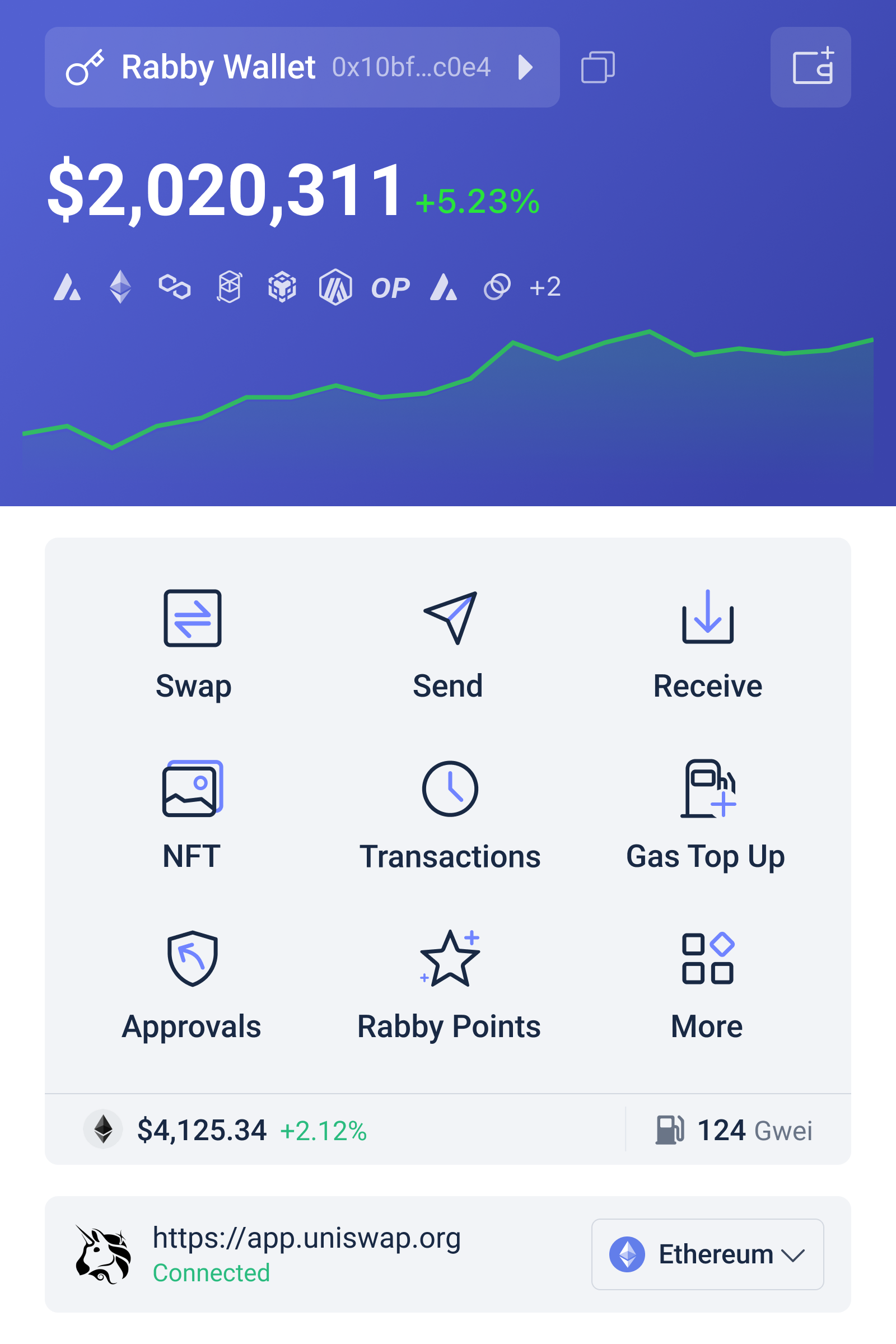
That distinction matters for users comparing a multi-chain wallet such as rabby wallet with more basic browser wallets. Rabby is designed for Ethereum and EVM-compatible networks, with a workflow centered on transaction simulation, risk warnings, asset visibility, and chain-aware signing. Those features can improve a user’s decision process. They do not turn smart-contract risk into a solved problem, and they do not replace careful key management.
The first myth: a security warning is the same as security
A wallet is an interface to blockchain permissions, not a judge with perfect knowledge. When a transaction simulator evaluates an action, it attempts to estimate the resulting state: which assets may leave the account, which tokens may arrive, what approvals may change, and which contract calls are involved. This converts opaque hexadecimal data into a more human-readable preview.
The improvement is significant because many dangerous transactions look harmless at the surface level. A user may think they are minting an NFT, claiming an airdrop, or approving a swap. Underneath, the transaction could grant a contract broad spending authority, transfer an existing asset, or invoke a function whose effects are difficult to infer from the website alone. Simulation creates an opportunity to compare the intended outcome with the likely blockchain outcome before signing.
But simulation is an estimate, not a guarantee. It depends on the available chain data, the behavior of the contract, the current state of the protocol, and whether the simulated environment accurately reflects what will happen when the transaction is mined. A contract can behave differently as market conditions, block state, oracle values, or access controls change. Some interactions also depend on later transactions or off-chain services. The right mental model is therefore “decision support,” not “automatic approval.”
How Rabby compares with a basic wallet workflow
A conventional browser wallet often presents the transaction requested by a decentralized application and asks the user to approve it. That approach can be perfectly adequate for straightforward transfers, especially when the user independently verifies the destination and amount. Its weakness appears when the transaction contains several contract calls or when the application’s interface hides the economic consequences.
A multi-chain wallet built around transaction interpretation offers a different trade-off. It may show the estimated balance changes, contract details, token approvals, network context, and warnings before signing. For a DeFi user moving between Ethereum, layer-2 networks, and other EVM chains, that context reduces the chance of approving an action merely because the website’s button says “Confirm.” The wallet becomes part of the research process rather than just the final signing window.
The cost is complexity. More warnings can mean more decisions, and a sophisticated interface can create a false sense of mastery. A user who learns to dismiss alerts automatically may be less safe than a cautious user with a simpler wallet. Risk indicators are also not identical to independent audits. A warning may be conservative, incomplete, or difficult to interpret; the absence of a warning is not proof that a protocol is trustworthy.
Three risk layers that should not be confused
For practical assessment, separate wallet risk into three layers. The first is key risk: whether a seed phrase, private key, hardware device, or signing environment can be compromised. The second is authorization risk: whether a user grants a contract more permission than intended. The third is protocol and market risk: whether the application itself contains a bug, is manipulated, suffers an oracle failure, or becomes economically unsafe.
Transaction simulation mainly helps with the second layer and parts of the third. It can reveal suspicious transfers or unusually broad approvals, but it cannot make a vulnerable protocol sound. It also cannot protect a seed phrase that has been entered into a fake website or stored in an exposed cloud account. This layered view is more useful than asking whether any wallet is simply “secure.” Different controls address different failure modes.
Multi-chain convenience creates a new verification problem
Supporting many EVM networks is valuable because DeFi activity is fragmented. Users may compare fees, liquidity, lending markets, and application availability across Ethereum and its scaling networks. A single wallet interface can reduce the friction of switching between those environments and make assets easier to monitor.
Yet chain portability also increases the chance of context errors. The same token symbol can exist on multiple networks, while similarly named contracts may have entirely different owners and code. A familiar application brand does not guarantee that every deployment is authentic. The correct question is not merely “Do I recognize this token?” but “Am I on the intended chain, interacting with the intended contract, through the intended domain?”
This is a non-obvious limitation of multi-chain design: convenience can compress several verification steps into one familiar-looking screen. A warning system can help restore context, but the user still needs a repeatable habit. Before signing, check the network, contract address, expected asset changes, and the purpose of each approval. For a high-value position, use a separate test transaction or a smaller amount first. That is slower than clicking through, but it changes the potential loss from catastrophic to bounded.
Approvals are often the real source of exposure
Many users focus on the amount sent in a single transaction. In DeFi, the more consequential decision may be an approval: permission for a contract to spend a token on the user’s behalf. An approval can be useful for trading or lending, but excessive or indefinite permissions can remain relevant after the original interaction has ended.
A strong wallet workflow should make approval scope visible and should encourage users to review old permissions periodically. The important distinction is between an approval that is narrowly limited to the amount needed and one that permits a contract to spend an open-ended balance. Neither choice is universally right; repeated interactions may favor convenience, while higher-value or unfamiliar activity may justify a smaller allowance and an additional transaction.
Revoking an approval also has a cost and does not undo transfers that already occurred. It reduces future authorization, but it cannot repair a compromised key or reverse a completed blockchain transaction. This is why wallet-based warnings are most valuable before signing. Prevention, containment, and recovery are different stages, and no single feature covers all three.
A practical comparison framework for US DeFi users
When comparing Rabby with a simpler wallet, assess the workflow rather than the feature list. Ask whether the wallet helps you understand a transaction before signing, whether it clearly distinguishes networks and contracts, whether it supports the signing devices you trust, and whether its warnings fit your level of experience. A professional treasury process may prioritize hardware signing, role separation, and documented approvals. A retail user may value clearer simulations and fewer blind signatures.
For everyday use, a useful four-step heuristic is: intent, identity, impact, and isolation. Intent means stating what you believe the transaction should do. Identity means verifying the chain, application domain, and contract. Impact means reviewing balance changes and permissions rather than only the gas fee. Isolation means limiting exposure through a dedicated wallet, a small test amount, or hardware-backed signing when the value at risk is substantial.
This framework also clarifies when Rabby-style tooling is most valuable. It is particularly useful for unfamiliar applications, complicated contract calls, token approvals, bridging, and activity across several EVM networks. Its relative advantage may be smaller for a simple, independently verified transfer. In other words, the wallet’s benefit rises with transaction ambiguity—not necessarily with transaction size alone.
What to watch as wallet security develops
The recent project messaging emphasizes Rabby’s positioning as a wallet for Ethereum and EVM networks, with a focus on being simple, fast, and secure across on-chain activity. The practical test of that positioning is not the breadth of supported chains by itself. It is whether users can make fewer blind-signing decisions as applications become more composable and transactions combine more actions.
If wallet interfaces improve their simulations and warnings, the likely benefit is better human judgment at the point of authorization. The unresolved question is how reliably those systems can interpret novel contracts, changing protocol states, and maliciously designed interfaces. Users should therefore treat future automation as a conditional aid: valuable when it exposes consequences clearly, but still subject to verification when the transaction is unusual or the value is high.
Frequently asked questions
Does transaction simulation guarantee that a DeFi transaction is safe?
No. Simulation can reveal likely balance changes, contract calls, and suspicious approvals before signing, but it is based on an estimated execution environment. Dynamic contract behavior, oracle changes, unsupported states, or malicious application design can limit its accuracy. Use the result as evidence for a decision, not as a guarantee.
Is a multi-chain wallet riskier than a single-chain wallet?
Not automatically. A multi-chain wallet can improve convenience and visibility, but it also creates more opportunities for chain confusion, counterfeit token contracts, and unfamiliar deployments. Its safety depends on whether the interface helps you verify network and contract context—and whether you consistently use those controls.
What is the most important habit when using a wallet for DeFi?
Do not sign from the button label alone. Confirm the chain, contract, intended asset movement, and approval scope. For unfamiliar or high-value activity, isolate the transaction with a small test amount or a separate wallet, and use stronger key protection where appropriate.
The most accurate assessment is neither that a multi-chain wallet eliminates DeFi risk nor that all wallets are interchangeable. A wallet such as Rabby can make hidden transaction consequences more visible, which is a meaningful improvement in a system built around irreversible authorization. Its boundary is equally important: visibility helps only when the user reads, questions, and acts on it. The strongest security model combines simulation with verified application identity, restrained approvals, protected keys, and a deliberate pause before signing.
Leave a Reply